
Youth unemployment — defined as the share of young people (typically ages 15 to 24) who are without work, are available for work, and are actively seeking a job — varies widely between countries due to differences in economic structure, education systems, labour markets, and demographics.
Senegal’s Youth Unemployment Context
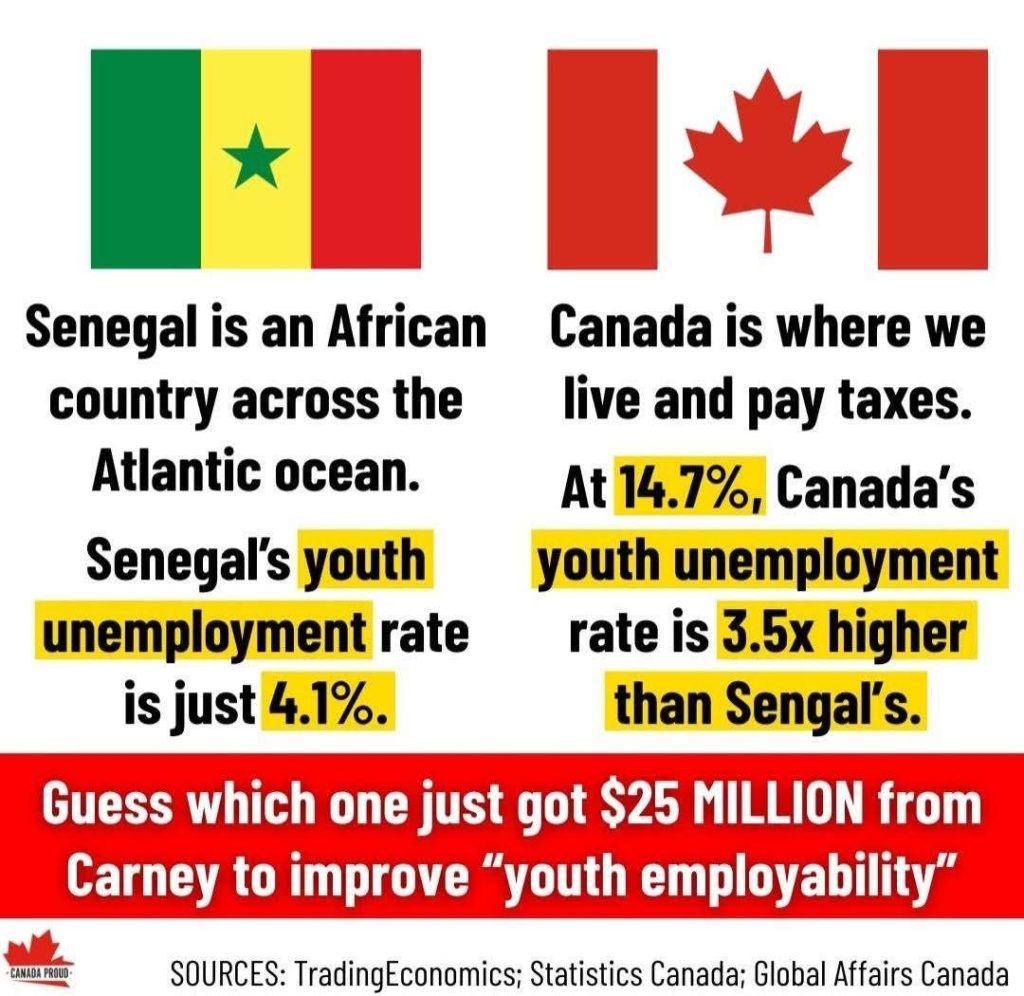
In Senegal, recent internationally comparable data show that the youth unemployment rate (ages 15-24) was approximately 4.1 % in 2024, according to World Bank modelled estimates. This rate is notably low compared with global averages (the world average is about 15.7 %).
However, measuring youth unemployment in Senegal can be more complicated than the headline percentage suggests. Because informal employment — small-scale, unregistered work in agriculture, services, and trade — dominates the economy, many young people remain employed in informal jobs that nonetheless offer low incomes, few protections, and limited career progression.
Some alternative surveys (e.g., Afrobarometer or national statistics) suggest much higher levels of self-reported unemployment or job search difficulties among young Senegalese, with figures sometimes cited close to 20 %–30 % for broader definitions of joblessness outside strict International Labour Organization criteria. This reflects how many young people may be under-employed, discouraged workers, or working in precarious conditions that labour surveys do not count as formal unemployment.
Economists and development experts also note structural labour-market barriers in Senegal such as:
- a skills mismatch between education and labour market needs,
- limited private-sector formal job creation, and
- strong population growth placing pressure on existing job opportunities.
Overall, Senegal’s youth unemployment rate by the standard ILO measure appears relatively modest, but the underlying labour market picture shows challenges in quality and sustainability of jobs for young people.
Canada’s Youth Unemployment Context
In contrast, Canada has experienced significantly higher youth unemployment in recent years. According to Statistics Canada, the unemployment rate for people aged 15 to 24 reached around 14.7 % in September 2025, one of the highest in over a decade outside exceptional pandemic years.
More recent monthly data from early 2026 showed the youth rate around 12.8 % in January 2026. These levels are substantially above Canada’s historical long-term average youth unemployment of roughly 13.8 %, though they fluctuate with economic cycles.
Canada’s labour market is more formalized than Senegal’s and captures broad segments of employment including part-time, full-time, and seasonal work. Youth unemployment there reflects several structural and cyclical factors, including:
- slow overall economic growth and job creation in certain sectors, particularly those often dominated by young workers (e.g., hospitality, retail, food services), reported at multi-year lows;
- demographic shifts with population growth outpacing job creation, especially among new entrants to the labour force;
- higher labour force participation among youth in education and training, which can temporarily push measured unemployment up as students search for part-time work.
Canada’s unemployment statistics also distinguish by age brackets; younger teens (15-19) often face the highest rates because of lower work experience and education commitments.
Comparative Summary
- Magnitude: Senegal’s headline youth unemployment rate (~4 %) is much lower than Canada’s (~13-15 %).
- Measurement Differences: Canada’s formal labour market makes youth unemployment estimates broadly comparable internationally, whereas Senegal’s large informal sector complicates interpretation; many youth may work in low-productivity jobs not classified as unemployed.
- Economic Structure: Senegal’s economy relies more on informal trade and agriculture, while Canada’s is diversified with formal services and industry sectors. This shapes how joblessness and under-employment are experienced.
- Policy Implications: Canada faces structural and cyclical job market challenges for youth, calling for targeted employment and training policies, while Senegal’s priorities include improving quality of jobs and formal labour market access for its growing young population.